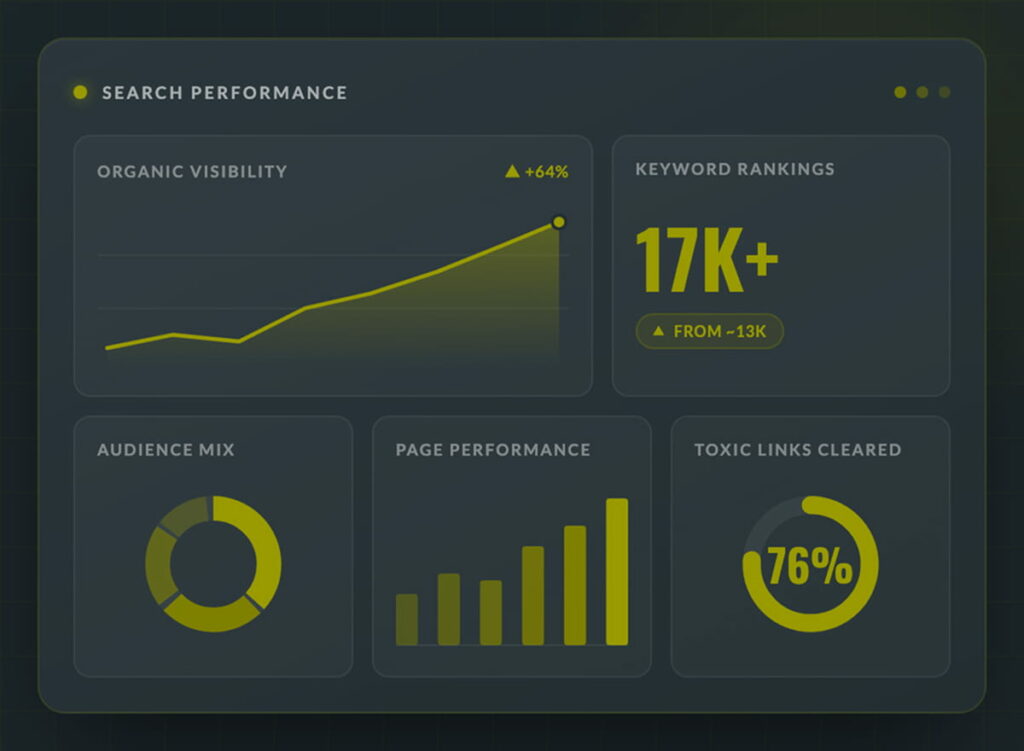
64%
New User Growth
17K+
Keyword Rankings
76%
Toxic Links Removed
16pp
Bounce Rate Drop
The Challenge
Ashoka University had the academic reputation, programme quality, and brand recognition to stand out. But its digital presence was not doing the institution justice.
Search-Driven Decision Journey
Prospective students, parents, fellows, faculty, and executive education audiences were all using search to discover, evaluate, and compare options. Yet Ashoka’s website was underperforming where it mattered most.
Significant Technical Debt
Thousands of broken internal links, duplicate title tags, missing meta descriptions, images without alt attributes, and a harmful backlink profile weakening the site’s authority — the same issues our technical SEO research across 194 university websites finds most often.
Visibility & Discoverability Gap
Structured data was missing or underdeveloped, mobile performance was poor, and the website was not set up to help search engines properly interpret, rank, and surface content — which is how 30% of universities end up not owning their own branded search results.
Multi-Audience Complexity
The site had to serve undergraduate applicants, postgraduate candidates, young scholars, executive education participants, faculty, parents, and stakeholders — each with different search behaviours.
Thrivemattic’s Approach
A phased transformation rather than a short-term traffic exercise.
01
Fixing the Foundation First
Comprehensive technical audit and remediation: broken links fixed at scale, legacy URLs redirected, meta titles and descriptions optimised, structured data introduced, and toxic backlinks cleaned up in phases.
02
Building for a Multi-Audience Ecosystem
Content and search audits across undergraduate programmes, Young India Fellowship, Young Scholars Programme, executive education, and academic departments. Strategy evolved around actual audience demand, with strong interest in CS/AI programmes shaping content priorities.
03
Creating Systems That Scale
Structured data for course content, automation for metadata generation, and processes for large-volume image alt text and page-level SEO. Work advanced technical streams independently while content changes moved through institutional review cycles.
The Outcome
Measurable Gains Across Search Visibility and User Acquisition
Bounce Rate
66% → 50%
Overall bounce rate improved significantly across all key pages
New Users
64%
Growth in new users driven by improved organic acquisition
Keyword Rankings
17K+
Keyword visibility grew from ~13,000 to over 17,000 rankings
Toxic Backlinks
76%
Reduction in harmful backlinks restoring domain authority
Why This Work Mattered
Search visibility directly shapes how students, families, faculty, and professional learners discover an institution. Thrivemattic’s SEO programme for universities bridged the gap between Ashoka’s academic standing and its digital performance, building stronger digital infrastructure for long-term, compounding growth across multiple audience segments — including readiness for how universities surface in AI search.
Programme-level impact was visible across undergraduate pages with lower bounce rates and better CTR, and the Young India Fellowship saw sustained organic traffic, engagement, and new user growth.
“Testimonial quote from Ashoka University to be sourced. This placeholder will be replaced with a direct quote from a university stakeholder about their experience working with Thrivemattic on this SEO transformation.”
Explore More
Frequently Asked Questions
How long does university SEO take to show results?
Compounding gains typically take 12 to 18 months. Technical fixes — broken links, metadata, structured data — show faster, while content and authority compound over time. The Ashoka University engagement ran for 18 months.
What results did Ashoka University’s SEO engagement produce?
Keyword rankings grew from roughly 13,000 to over 17,000, new users rose 64%, bounce rate fell from 66% to 50%, and 76% of toxic backlinks were removed.
What does technical SEO for a university website involve?
Fixing broken internal links at scale, redirecting legacy URLs, de-duplicating title tags, adding meta descriptions and image alt text, introducing structured data, and cleaning up toxic backlinks.
Why do universities with strong reputations still struggle with search visibility?
Academic reputation does not automatically translate into digital performance. Technical debt, missing structured data, poor mobile performance, and the complexity of serving many audiences at once all suppress search visibility.
How is university SEO different from regular SEO?
A university website serves many audiences at once — applicants, parents, faculty, fellows, and executive-education learners — runs content through institutional review cycles, and needs a programme-level page strategy.
Can SEO be automated for a large university website?
Partly. Metadata generation, image alt text, and page-level optimisation can be systematised at scale, while strategy and content remain human-led.
Get Started
Is Your University Visible Where It Matters?
Discover how Thrivemattic can strengthen your institution’s digital presence and connect you with the audiences actively searching for what you offer — or see where your university ranks today.