How Stack Built a UK Demand Engine for Cloud & Cybersecurity Services
A 2+ year engagement across positioning, website, content, SEO, paid, email and outbound — turning a delivery-led IT services firm into a brand with its own inbound pipeline across three distinct UK buyer audiences.
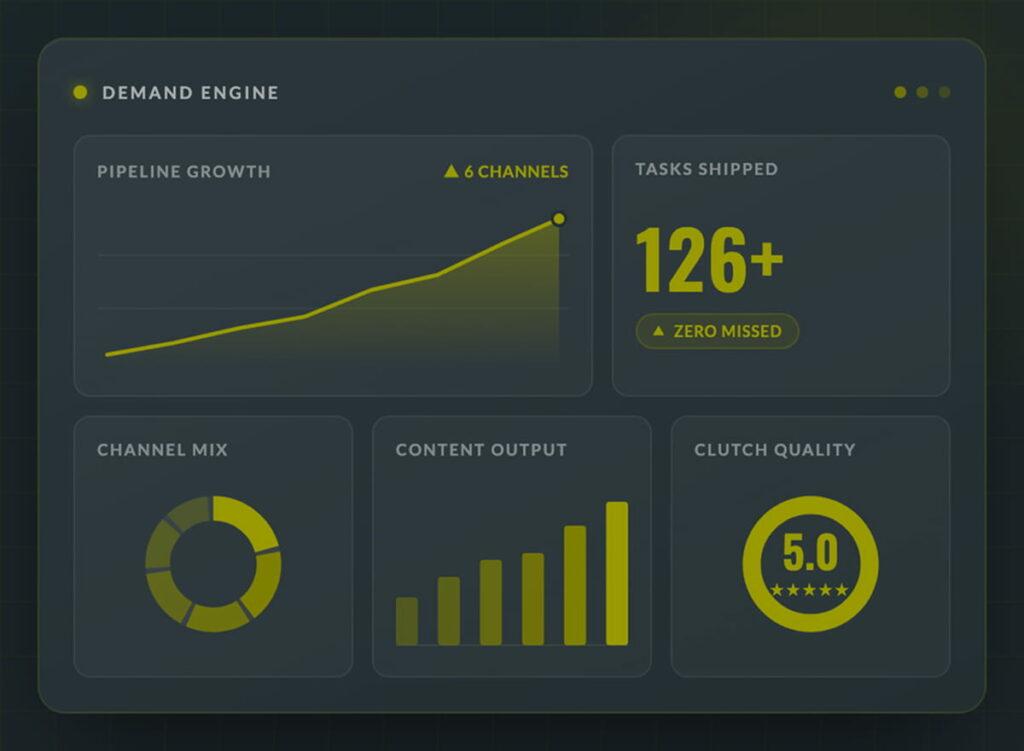
3
Audiences Mapped
20+
Blogs Published
4
Playbook Launches
6
Channels Running
The Challenge
Stack had the delivery record — including a £3M cloud security programme with a 5-week team ramp-up — but no marketing engine to match. In a category where UK primes spend millions on demand gen, “invisible” was the growth risk.
Pipeline Ran on Founder Network
Every new engagement traced back to the founder’s relationships. Strong short-term, fragile long-term — and impossible to scale alongside a growing delivery team. The firm needed its own demand channel.
Website Was a Business Card
No content operation. No SEO footprint. No lead magnets. No nurture sequences. The site carried delivery credibility but wasn’t wired to capture, qualify, or convert search and social traffic into pipeline.
Three Audiences, Two Offers
Expertise-led staffing for IT services firms. Outcomes-led managed services for end-user enterprises. UK Government sales on top of that. Generic B2B marketing would muddle all three. Clarity had to come before campaigns.
Sector Depth Non-Negotiable
Cloud and cybersecurity buyers have bought services for a living. Thin content and generic copy would get seen through in a single scroll. The marketing needed the same rigour as the delivery work it was selling.
Thrivemattic’s Approach
Map the buyer. Build the spine. Then turn every channel on in coordination.
01
Positioning & Foundation
Three audiences, five sub-segments, seven personas. Full TOFU / MOFU / BOFU funnel with MQL and SQL definitions by source. Website rebuilt — hero, case studies hub, pricing, playbook templates, quizzes — with HubSpot, Jotform and Mailchimp wired end-to-end. Two trigger-based nurture sequences (Cyber + Cloud) running before a single ad was live.
02
Content & Playbook Engine
20+ long-form blogs across three pillars — Cyber, Cloud, Talent — backed by Tech Nation, CW Jobs, Karat, and Cisco Readiness Index research. Four gated playbooks (FinOps, Hyperscaler, GCP Hiring, Zero Trust) each shipped with a dedicated landing page, automated email sequence, ad campaign, and event hook. A co-branded Digital Ocean webinar tied everything together.
03
Outbound & SEO Compounding
A repeatable seven-step sector engine: ICP → account list → LinkedIn URLs → Sales Navigator → Evaboot → Smartreach, with every campaign tagged for clean attribution and total tooling under $150/month. In parallel, keyword research, schema, on-page, guest posts, and backlink outreach ran on a weekly cadence to compound organic visibility across all three pillars.
The Outcome
A Client Partnership That Outlasted a Company Rebrand
Clutch Quality
5.0/5
Perfect score on delivery quality across the engagement
Willing to Refer
5.0/5
Top score — client actively recommends Thrivemattic
Schedule Reliability
5.0/5
On-time delivery across 126+ tracked tasks over 2+ years
Value for Cost
4.5/5
High-output engagement within a defensible agency budget
Why This Work Mattered
B2B services marketing fails when campaigns run ahead of clarity. Starting with the buyer map, funnel, and martech spine meant every asset that followed had a reason to exist, and every channel had a defined role. Thrivemattic bridged the gap between Stack’s delivery credibility and its digital discoverability — building a demand system that compounded through the engagement and carried forward across a company rebrand.
The same buyer-first, system-led approach now underpins Thrivemattic’s work with B2B services firms across cloud, cyber, SaaS, and adjacent categories.
“They’re knowledgeable about the latest marketing and technology trends. Project management was highly organised using Slack and Google Drive with on-time delivery.”
Verified review on Clutch · Quality 5.0 · Schedule 5.0 · Willing to Refer 5.0
Explore More
Frequently Asked Questions
How long does it take to build a B2B demand engine?
Stack’s was a 2+ year engagement. Foundations — positioning, website, martech — come first; content, SEO, and outbound then compound. The engagement outlasted a company rebrand.
What does a B2B demand generation engine include?
A buyer map and funnel, a website wired to capture and qualify leads, CRM/martech integration, a content and lead-magnet engine, paid and SEO, cold outbound, and event marketing — all running in coordination.
Why does B2B services marketing fail?
It fails when campaigns run ahead of clarity. Without a buyer map, funnel, and martech spine, individual assets have no defined role and budget leaks.
How is marketing for IT services and cybersecurity firms different?
Those buyers have bought services for a living, so thin content is seen through immediately. Category depth is non-negotiable, and distinct audiences and offers must be kept clearly separated.
What results did the Stack engagement produce?
3 audiences mapped, 20+ blogs, 4 playbooks, 6 channels in coordination, 126+ tracked tasks — and Clutch scores of 5.0 Quality, 5.0 Schedule, 5.0 Willing-to-Refer, 4.5 Value for Cost. The engagement continued across a company rebrand.
Can a small B2B firm run cold outbound affordably?
Yes. Stack’s seven-step sector outbound engine ran on under $150/month in tooling, with every campaign tagged for clean attribution.
Get Started
Is Your Services Firm Invisible to Its Own Buyers?
If your pipeline runs on founder relationships, your website is a business card, and your category has buyers who’ve bought services for a living — we should talk.